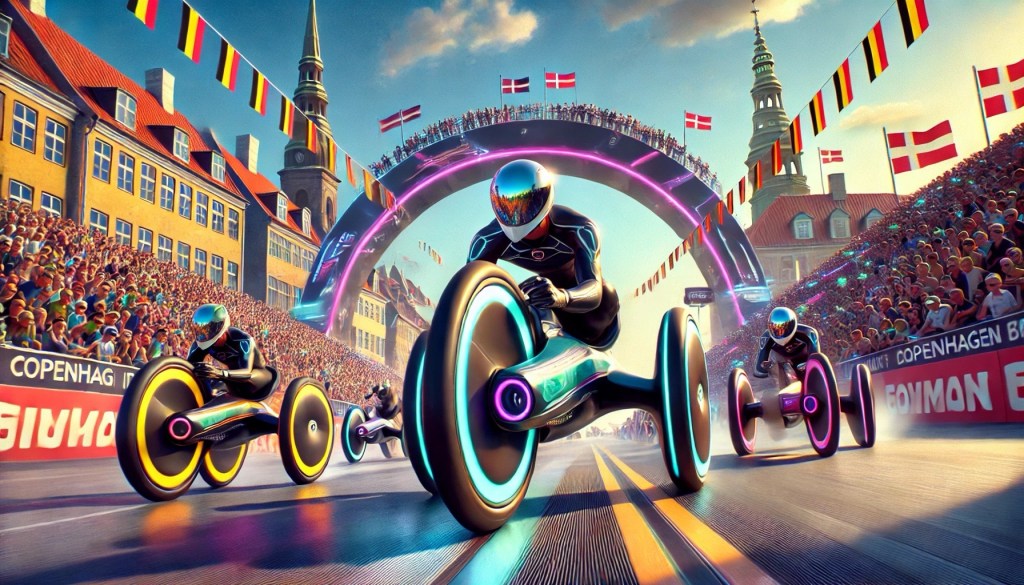

The Scandal That Led to the Draft
Part One: The Rise of the Lower Divisions (T2 and T3)
In 2008, the International Tricycle Racing Association (ITRA) made a bold move to expand the world of Tricyclette. The T1 division, long considered the pinnacle of tricyclette racing, was growing increasingly competitive and exclusive, with only a handful of top-tier drivers rotating through the championship ranks year after year. This left little room for fresh faces and emerging talent. In an effort to create more opportunities for young and aspiring racers, the ITRA introduced two new divisions: T2 and T3.
The idea behind T2 and T3 was simple—these lower divisions would act as proving grounds for drivers looking to build their skills, gain experience, and work their way up to the elite T1 level. T2 became the official second division, featuring drivers with the potential to rise to the top, while T3 functioned as an entry-level circuit, designed to nurture raw talent and provide them with a competitive platform.
In the early years, the introduction of T2 and T3 brought a new wave of excitement to the sport. It gave young drivers the chance to race in front of crowds, hone their abilities in a professional setting, and build their reputations. However, despite the success of these lower divisions, there was no formal mechanism for drivers to move between them and the prestigious T1 division. Teams occasionally signed standout drivers from T2 or T3, but this was infrequent and often based on connections or sponsorship deals rather than pure talent and performance.
The lack of a clear path for promotion left many promising drivers stuck in the lower divisions, while underperforming drivers in T1 remained safe in their positions. The sport needed a shake-up, and by the mid-2010s, it became clear that the ITRA had to implement a system that would allow the best talents to rise to the top while keeping the T1 division competitive and fair.
 tricyclette
Leave a comment